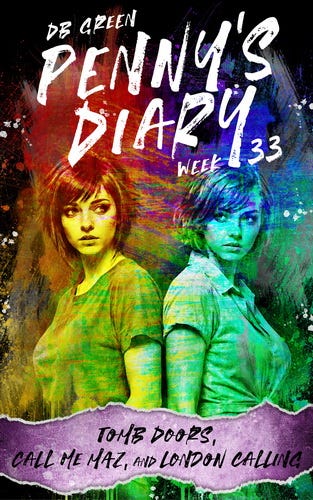
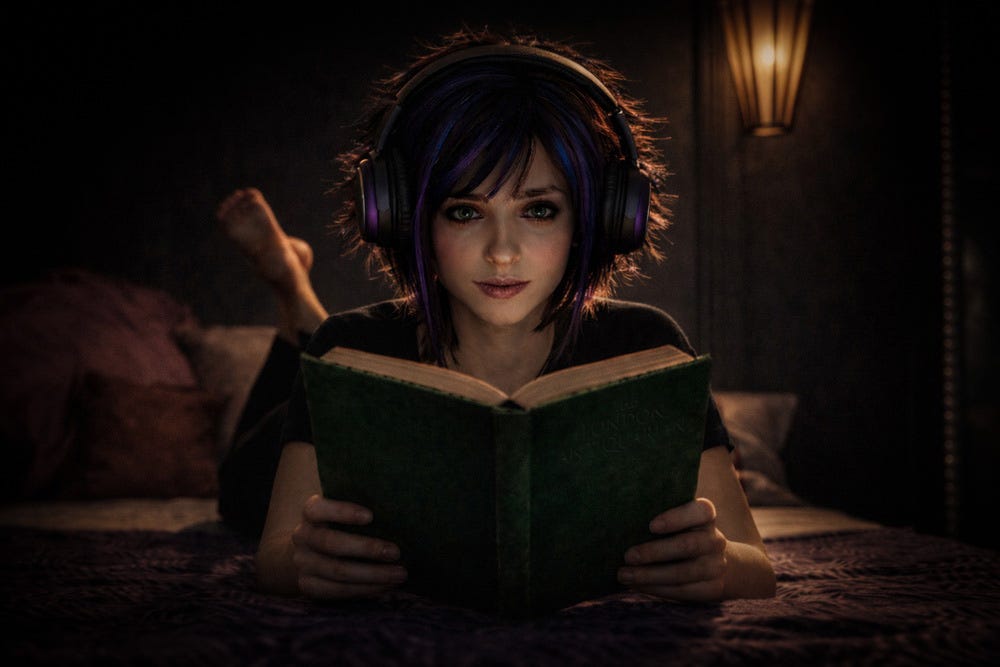
Welcome to Penny’s Diary, a contemporary urban-fantasy serial. Read new diary entries every Thursday. Supporting readers can also access a weekly Writer’s Commentary, along with immersive audio and eBook editions, after each entry.
New to Penny’s story? Begin at the very first entry by clicking the button below and step into the moments where everything started to change.
Subscribe to receive new diary entries straight to your inbox each week as the story unfolds.
Saturday, August 15, 2026
Twelve Hours Earlier
If today was a movie, it would start with the tourist montage I did not actually get.
Me standing in front of Big Ben like I had personally discovered clocks.
Me pointing at a red bus with the kind of excitement usually reserved for miracles, lottery wins, or iced drinks arriving before the ice melts.
Me outside Buckingham Palace pretending I had complicated political opinions and did not mainly want a photo.
There would be music. Probably something aggressively British. Maybe a title card.
PENNY SUMMERS: LONDON.
Very glamorous.
Very international.
Then the screen would cut to black.
TWELVE HOURS EARLIER.
Except this is not a movie.
Because twelve hours earlier, I was in a tomb.
Not visiting one.
Not standing behind a velvet rope while someone explained the dead people and gift-shop opening times.
Inside one.
With Marilyn Moreau.
And no obvious way out.
Cupcakes Before a Bad Plan
Before we get to the tomb, we should probably go back to the start of Saturday.
Which began with cupcakes.
We went to Cascades because weekly rituals apparently do not cancel themselves just because Candy Steele has sent your girlfriend a private summons with the emotional warmth of a court order.
For a while, it was almost normal. Teddy met us there looking like he had slept for eleven minutes, worn down by Chen Print and already worrying about Sunday’s trip to Halifax to see his dad.
The new part-time help at the shop had taken a little pressure off, which Teddy described as progress in the voice of someone waiting for progress to develop terms and conditions.
Ellie ordered iced coffees, and Willowfen still followed us in little pieces.
Charlotte was working behind the counter. Felicia sat near the end, both of them laughing over something on Charlotte’s phone.
Redheads sticking together again.
Still cute, according to Ellie.
Still mildly threatening, according to me.
After our drinks, we took the cupcakes back to the Memory Vault.
Before opening Younger Penny’s fifth diary, we gave Teddy the safe Willowfen highlights.
The Bellweather Hotel.
The places we had loved without turning them into evidence.
I showed him a few of the ordinary photographs. Not the private ones. Those still belonged to me and Ellie.
Then we went over Candy’s message again.
Candy: Can you come by tomorrow afternoon before I leave? Need to clear something up. Just you.
Teddy hated the last two words as much as I did.
Every rule we had made around Candy said Ellie should not meet her alone.
Ellie knew that.
She also knew refusing completely might make Candy move the pressure somewhere else.
So we built the least bad version of a bad plan.
Ellie would go, keep the meeting short, and leave if Candy tried to change the location or isolate her further.
Only after that did we open Younger Penny’s fifth diary to where we had stopped before Willowfen.
The first entry that mattered was about Logan.
Younger me had searched for him outside of Clearwater. She even asked her teachers at school.
Nobody knew him.
She described him instead. Dark hair. Annoying smile. Said stupid things when I was scared because making me angry was better than letting me cry.
Nothing.
Then Eleanor appeared in the entries.
Younger Ellie.
Eleanor.
Adults answered with polite confusion or the careful voice they use when they think a child has invented someone.
The memory blasts came in pieces.
A cold school hallway.
My hand crushing a folded note.
A teacher asking, “Are you sure you haven’t mixed up the names?”
My own voice getting sharper.
Then frightened.
The worst part was not that younger me could not find them.
It was that she kept trying to prove they had existed at all.
The writing became messier. Names rewritten. Questions pushed into the margins.
Then three pages had been ripped out.
Of course they had.
Teddy wrote everything down.
He stared at the Matrix notebook before asking, “Who was allowed to know they existed?”
Not where had they gone.
Who was allowed to remember.
Younger Penny had known nothing about protected laptops, evidence boards, or recovery anchors.
She had only known that she loved people nobody else could see.
She had been trying to build Bobby before Bobby existed.
And now I had to wonder whether that instinct had really been hers alone.
The Person You Trust
We did not casually decide Ellie should meet Candy.
Refusing her completely might have made her escalate somewhere else, and Ellie wanted to face her instead of waiting for whatever “clear something up” meant.
So Teddy dropped her off at Seven Trees Farm.
I stayed in the Memory Vault to put away the fifth diary and enjoy being the person everyone considered safest when left behind.
Ellie texted when she arrived.
Then nothing for thirty-four minutes.
I know because I counted.
My phone buzzed while I was sliding the diary back into hiding.
Ellie:Found something out about Candy. Meridia Library. Back steps. Don’t call. Candy is here.
It felt wrong.
It was not on the RGN app. Ellie would normally tell me not to move before explaining why. She would also use punctuation properly during an emergency because apparently commas are part of moral character.
But it sounded rushed. Like Ellie had typed it while Candy was looking the other way.
And if Ellie had managed to get one warning out, waiting for a perfect message felt more dangerous than going.
The problem with trusting someone completely is that a message does not have to sound perfect.
It only has to sound urgent.
So I grabbed my backpack and left.
The library was open.
The back lane was empty.
No Ellie.
I sent one message.
Penny: Here.
Something moved behind me.
After that came fragments.
A hand over my mouth.
Fabric over my head.
My hands tied.
The rubber floor of a vehicle.
My knees striking metal whenever we turned.
I counted corners until six.
Then lost count.
When the hood came off, I was on cold stone with blood in my mouth from biting my lip.
One weak light.
Stone walls.
Stone ledges I decided not to examine.
And Marilyn Moreau sitting against the far wall, dirt on her face and her arms around her knees.
“Of course she brought you.”
The Steele family tomb lay beneath the old crypt at Seven Trees Farm.
Marilyn knew where the signal died, where shouting was useless, and which part of the frame shifted without opening.
I asked how.
“Because this isn’t the first time I’ve been locked in here.”
The outer door opened before I could ask anything else.
Candy walked in carrying my backpack.
She was calm.
Worse than screaming.
She explained that the group photograph from Three Falls—the one everyone kept sharing—had put Marilyn in the center and made it look like Candy had lost control.
She used words like loyalty, embarrassment, consequences, and people knowing their place.
Same thing.
Better outfit.
Candy searched my backpack.
The hidden diary compartment stayed hidden.
Then she found the Polaroid camera.
“You know what I like about old cameras?”
I suspected the answer was about to ruin photography.
Flash.
The picture slid out.
Marilyn.
Me.
The tomb wall behind us.
Candy tucked the photo into her pocket and dropped the camera back into my backpack.
“Someone will probably let you out tomorrow. Maybe the day after.”
She tilted her head.
“Assuming you’re both well behaved.”
Then she left, dropping my backpack beside the door.
The lock turned.
After Marilyn untied my hands, we shouted, pushed the door, tested the hinges, the air vents, and every loose stone we could find.
She showed me where she had once shifted part of the doorframe.
And where Candy had caught her afterward.
I tried my phone.
No signal.
Calls. Messages. Anything.
“It won’t work,” Marilyn said.
I tried once more anyway.
Nothing.
The air did not run out exactly.
It grew heavier.
My hands started shaking before I admitted I was scared.
Then I remembered the hidden compartment.
My diary was still inside the backpack.
Sean’s Seven of Hearts was tucked where I had left it.
And beneath both was RG’s help paper.
Marilyn watched me unfold it.
“What is that?”
“Hopefully not stationery.”
There was only the rule RG had given me.
Write the word when I meant it.
I pressed the paper against my knee and wrote.
HELP.
The ink disappeared into the page.
It grew hot enough to make me drop it.
Nothing happened.
Almost a minute passed.
Then a glowing orange line rose from the stone floor and traced a rectangle in the air.
The space inside folded open.
The tomb suddenly had somewhere else inside it.
RG stood on the other side, one hand braced against the shimmering frame, head lowered as though holding it together by force.
He reached for us.
The frame flickered.
Then RG caught my wrist.
I grabbed Marilyn.
And the tomb vanished.
I landed on polished floorboards hard enough to bruise my hip.
Books climbed through impossible balconies.
A staircase curved toward warm light.
Somewhere nearby, a bell rang although no door had opened.
RG collapsed beside us.
Marilyn stared at the endless shelves.
I sat up on the floor of a bookshop in London.
The London Antiquarian.
Alive.
Bruised.
And very far from home.
Sunday, August 16, 2026
Soup, Blankets, London
After the rescue, everything happened in a blur.
There was a medical check first.
RG checked our pupils, breathing, wrists, and bruises, then asked whether either of us felt sick, dizzy, confused, numb, or able to smell burning when nothing was burning.
That last one felt oddly specific.
Then the RGN app on my phone connected to something and let me group-call Ellie and Teddy.
Apparently international magical displacement did not require a roaming add-on.
I managed the important parts.
Candy.
Tomb.
Alive.
Marilyn with me.
RG got us out.
London.
Ellie made a sound that nearly broke me. Teddy started asking questions faster than I could answer them. I promised I would call properly in the morning.
Marilyn declined the offer to call home.
Then we slept.
I woke up under three blankets in a room that smelled like old paper, furniture polish, and soup.
Not a terrible combination.
Honestly, after the tomb, someone could have wrapped me in a shower curtain and handed me cold beans and I probably would have called it hospitality.
My left hip hurt where I had hit the floor. My shoulder felt like somebody had tried to remove it without permission. A bruise was forming around my wrist in the exact shape of someone else’s fingers, which was a fun little souvenir I had not requested.
Marilyn was already awake.
Of course she was.
She sat upright in the chair beside the narrow bed, still wearing the same dirt-marked clothes, with the blanket folded across her knees instead of around her. Her hair had been finger-combed. Her face was clean except for one dark mark near her jaw.
She looked like she was waiting for an interview.
Or sentencing.
There was soup on the small table between us.
Two bowls.
Two spoons.
One piece of bread each.
Marilyn had not touched hers.
RG returned carrying the same battered medical bag and repeated enough of last night’s checks to prove he still did not trust either of us to remain medically ordinary.
The help paper lay on a tray beside the Polaroid camera. One corner had burned away, and a dark line ran through the middle like the page had cracked.
I had not noticed the damage when we landed.
Probably because I had been busy hitting the floor of an impossible bookshop.
RG picked it up carefully.
“That rescue used my last Magic Shot. The paper won’t work again.”
Magic Shot.
Whatever that was.
The important words were lastand won’t.
Apparently our emergency exit had been single-use, expensive, and now partially toasted.
A replacement did not seem to be arriving anytime soon either.
Excellent system.
After RG left us with instructions to eat, drink, and stay inside, I carried my soup out into the bookshop.
That was when The London Antiquarian became impossible again.
I had expected a narrow old bookshop. Maybe three rooms if everyone stood politely.
Instead, balconies climbed through several floors of shelves. A wooden staircase curved upward beneath glowing chandeliers. The counter looked older than Gramps’s favorite cinema projector, with a brass register and a neat stack of green notebooks beside it.
I finally understood why Ellie got so excited whenever somebody said, “It’s bigger on the inside.”
Green notebooks.
Exactly the same as my diaries.
I looked away.
The corridor behind the counter had changed since last night. I was sure of it. One doorway now stood where a wall had been, and somewhere deeper inside, floorboards creaked as if the building had shifted its weight.
Nothing about the place should have felt normal.
But standing there with soup warming my hands, I knew where the staircase turned before I looked.
I knew the counter would have notebooks.
I knew there was more space behind the left-hand door than the outside wall could possibly hold.
The London Antiquarian was not only strange.
I recognized it.
The Call Home
The call the night before had been proof of life.
This one was the conversation.
By the time I called properly, it was late afternoon in London and around lunchtime back home.
Ellie answered before the first full ring.
“Penny, I’m so sorry.”
Her voice broke on my name.
That was worse than the tomb for one very specific second.
I pictured her in the apartment, pacing around and worried sick.
“Candy did this,” I said. “She took your phone and sent the message. She did not use you.”
Ellie went quiet.
Trying-to-breathe quiet.
I gave her the proper version.
Bruised, not broken.
Marilyn was with me.
RG had gotten us out.
The backpack had survived, and the help paper looked partially toasted.
I also told her the bookshop felt weirdly familiar.
We stayed like that for another minute.
Just me and Ellie.
Then Teddy finally joined the group call.
Apparently he had spent exactly as long as his self-control allowed pretending to give us some privacy.
He took over before either of us could start apologizing in circles.
Exact location. Injuries. Blackout. Phone status. Whether Candy had seen the diary. Whether the Polaroid camera had survived. Whether RG had a return route.
By question six, I was out of breath.
By question nine, Teddy had stopped sounding calm enough to be believable.
I gave him what I knew.
London.
Bookshop.
Magical doorway.
Last Magic Shot, whatever that meant.
Damaged paper.
No route home yet.
That produced a silence with several curse words hiding inside it.
Ellie and Teddy had already built a cover.
As far as Meridia Falls needed to know, I was helping Gramps with restaurant-opening work. Marilyn’s mom had taken Candy, Kaelyn, and Sally on the ski vacation, so Marilyn told her stepdad, Isaac Steele, that she needed space and was staying with us for a few days.
Ellie said one of Candy’s lower-orbit girls had messaged her that morning. She had gone to unlock the crypt after Candy left and found it empty.
Apparently the message had started as Is Penny with you? and fallen apart from there.
Candy still did not know how we had escaped.
Mostly because nobody did.
I told Ellie about Marilyn.
How she knew exactly what to do because Candy had put her in that tomb before.
Mostly, I wanted Ellie beside me.
Instead, I told her to keep my side of the couch clear.
Tonight should have been Doctor Who night.
We should have been arguing over snacks while Teddy complained that our episode-selection system was not statistically valid. Ellie should have been leaning against me before the opening credits finished, pretending that was not always the plan.
Instead, I sat under a borrowed blanket in a London bookshop and listened to her breathe through a connection I did not understand.
Ellie finally said bye.
From another continent.
On what should have been ourDoctor Whonight.
The Bookstore Remembers
RG brought one of the green notebooks to the table after dinner.
Not one of mine.
Except it looked exactly like one of mine.
Same green cover. Same cream paper. Same slightly too-serious weight. Same embossed name.
My diary was in my backpack beside the ruined help paper.
The older ones were back at the Meridian.
But all of them had come from here.
Apparently.
RG said The London Antiquarian preserved things threatened by magical alteration.
Written truths.
Original records.
Names people had been made to forget.
Evidence preserved before it was altered.
He said it simply, like that did not explain half my life.
The diaries behind the AC vent. Missing pages. Recovery letters. Bobby.
Every system we had built because writing something down felt safer than leaving it inside our heads.
The shop was that idea made into a building.
RG turned the notebook so the embossed name faced us.
THE LONDON ANTIQUARIAN
I read it without difficulty.
Marilyn could too.
More importantly, she still remembered it after looking away.
So I told her about Teddy.
How he could read the name, look away, and lose it before he could repeat it properly.
When he could read it at all, that is.
How me and Ellie could both retain it.
Marilyn looked back at the notebook.
“So why can we remember it?”
RG explained it without making it less strange.
“The perception magic usually gives way after someone has been shown the place properly.”
Not heard about it.
Not read the name.
Shown the place.
That explained Marilyn now.
It did not explain Ellie and me.
“So you’re saying me and Ellie have been here before?”
RG did not answer that directly.
Which was almost worse.
He gave us only the edge of the wider story.
My Aunt Holly had known the shop too. She had preserved evidence because memory and records could be altered.
Then Holly had been erased.
Not killed.
Erased in the same impossible way Jemma Landry had been erased.
Made difficult for the world to hold.
Most people forgot her.
Some evidence survived.
There was more of it elsewhere, but RG was not opening the full subject while we were bruised, stranded, and missing from another country.
Rare good adult decision.
If the perception rule was right, me and Ellie had not simply heard the name before.
Someone had brought us here.
Or shown it to us closely enough that the magic still recognized us.
And if doors like this could open anywhere, maybe that was how Younger Penny and Eleanor had reached Longstone Hall too.
Neither of us remembered any of it.
Someone—or something—had made us forget.
I thought about Clearwater.
About waking up with the wrong version of my life and needing letters, drawings, and old evidence to put it back together.
“You know what happens to us after Clearwater,” I said.
He nodded.
“Does it affect you?”
“We’re exempt.”
We.
I noticed.
He did not explain.
“After Clearwater,” he said, “when you’re all back, send me a short message on the RGN app.”
Back.
He did not say memories restored.
He did not need to.
Monday, August 17, 2026
Not Marilyn Anymore
Waking up in London a second time made it official.
This was not one strange night that would end with me opening my eyes in my apartment at the Meridian and deciding never to eat anything suspicious before bed again.
I was still here.
Still bruised.
Still without a passport, luggage, or any legal explanation for how I had crossed the Atlantic.
At least I had my phone.
Which was useful for calling and messaging Ellie and completely useless for explaining how I hadentered the United Kingdom without a passport.
The London Antiquarian provided practical things without anyone explaining where they came from.
Clean towels.
Toothbrushes still in their packaging.
A pile of borrowed clothes arranged by size and suspiciously close to what each of us would have chosen, which was either excellent magic or extremely organized stalking.
London was in the middle of a heat wave, so I took shorts, a purple T-shirt with a subtle Union Jack across the front, and the lightest pair of shoes available.
When in Rome.
Or London, apparently.
British weather had decided to become personally confusing.
Marilyn asked before touching anything.
Not politely in the normal way.
Carefully.
Could she take the blue shirt? Was the soap for both of us? Should she leave the towel somewhere specific? Did whoever owned the clothes need them back immediately?
She asked permission to eat the toast.
That one stayed with me.
I had seen Marilyn walk onto a stage like the building had been constructed around her. I had watched her make an entire room rearrange itself around the version of her people expected.
Here, with wet hair and borrowed clothes, she waited for someone to tell her whether breakfast was allowed.
I did not ask why.
Some questions are answers wearing disguises.
The Polaroid camera was safe in my backpack, although every time I saw it, I thought about the photograph developing in Candy’s hand.
Marilyn noticed me checking.
She looked away first.
We ate in the living room of one of the impossible apartments above the shop, where one wall definitely had not been there the night before.
The building had apparently decided we needed more privacy.
Normal bookstore behavior.
Marilyn kept correcting herself whenever she almost said something honest. Her dad became “painful stuff.” Candy became “the situation.” The tomb became “what happened.”
Then she set down her coffee.
Not nervously.
Deliberately.
“I don’t want to be Marilyn anymore.”
I waited.
She looked at me properly.
“Marilyn is the version Candy knows how to control. The pageant version. The one who smiles and does what she’s told.”
Her fingers tightened around the cup.
That was all she gave me.
It was enough.
Someone Else’s Emergency
RG had been dealing with another emergency before mine arrived and demanded international attention.
He showed me and Marilyn the practical version in a back room that looked like Bobby’s older, angrier cousin.
Maps.
Notes.
Photographs.
Names connected by lines.
Except RG’s board covered London, places I had never heard of, and routes that apparently did not involve roads.
At the center was one name.
Jenny.
I did not know who she was.
Not yet.
But RG said her name differently from everything else on the board.
Carefully.
Like it hurt.
“She’s someone I love,” he said.
That answered enough.
Jenny needed something called Medies Flor.
I had no idea what that meant either.
RG explained only the useful part. It was a treatment that could stabilize whatever was happening to her and slow it down.
Not cure it.
Buy time.
Her supply was almost gone.
A man named Tafarai—another person I had apparently entered the middle of knowing—had already helped RG plan a heist for Wednesday to get another vial.
Because apparently “medical emergency” and “planned heist” were allowed to belong in the same sentence now.
The problem was the route.
RG had mentioned Magic Shots after the rescue.
I still did not know what one was.
Only that he had used his last one to reach the tomb.
Then I wrote HELP.
He answered.
The heist had depended on RG’s last Magic Shot.
Now they needed another way in.
I looked at the ruined help paper tucked inside my diary and felt sick.
“You should have saved it,” I said. “For Jenny.”
RG stopped looking tired.
For one second, he looked dangerous.
“Candy Steele put you in that tomb. You asked for help because you needed it. I chose to answer. None of that belongs to you.”
Unfortunately, feelings are not required to listen when someone makes a good point.
A few minutes later, RG took a call from a woman named Cassandra.
Another new name.
Another person connected to a story I had somehow entered halfway through.
I only heard RG’s side of the conversation, but I caught the important parts.
Jenny was weaker.
Cassandra had done what she could.
Wednesday’s plan was still possible.
Stable did not mean fine.
The notes spread across RG’s board added more things I did not understand: failed routes, missing Magic Shots, and warnings about something called Shadow Gates.
Marilyn probably understood even less.
We had been dragged into RG’s world without a map, a glossary, or permission to pretend it made sense.
But I understood the consequence.
Getting us home was no longer as simple as opening another magical doorway.
Back in Meridia Falls, Ellie and Teddy were keeping the cover alive. I was supposedly helping Gramps with the restaurant opening. Marilyn had told her stepdad, Isaac Steele, she needed space and was staying with us.
RG also sent Gramps a coded message confirming that I was alive and with him.
A reply came back almost immediately.
Just enough to confirm Gramps had received it.
No panic.
No demand for proof.
No question about why I was with RG.
Excellent.
Another mystery for the pile.
By Monday night, the facts were these:
Jenny was running out of time.
RG had spent his last whatever-a-Magic-Shot-was saving me and Marilyn.
Getting home had become harder.
And Wednesday’s heist was still happening.
Tuesday, August 18, 2026
Almost Being Tourists
RG allowed us out of the Antiquarian under rules that made the trip feel less like sightseeing and more like supervised release.
Stay together.
Do not go anywhere alone.
Apparently taking Polaroids in London was fine.
The first strange part came when we finally left through the front door.
The London Antiquarian stood in Cecil Court.
Actual Cecil Court.
The street I had already walked from one end to the other on Google Maps while trying to prove the shop existed.
I had checked every storefront.
Twice.
The Antiquarian had not been there.
Now it sat between the other shops in dark wood and green lettering as though it had been waiting for me to stop looking.
I took out the Polaroid camera before reality could change its mind.
The photograph caught the whole shop.
Proof that the London Antiquarian was really there.
Apparently Google Maps had not failed.
Reality had been uncooperative.
So me and Marilyn got heat, crowds, and the Underground.
Our phones worked for contactless payments. RG had also given us some British cash in case they didn’t, which was probably sensible considering we’d arrived through a magical doorway instead of Heathrow.
Ellie had also sent me one instruction.
Take the Underground to Earl’s Court. Come out of the station. Don’t look it up first. Trust me.
Suspicious.
Extremely Ellie.
The heat sat between the buildings and rose from the sidewalk like London had been left too close to an oven.
The Underground was worse. The map looked like several bowls of colored spaghetti had been forced into a transportation career, and the platforms felt approximately three degrees away from becoming soup.
Then we came out of Earl’s Court Station.
A blue police box stood outside like the universe had finally decided to apologize.
I stopped so suddenly Marilyn nearly walked into me.
I called Ellie before Marilyn could ask why.
She answered almost immediately.
I turned the phone so she could see it.
Then she made a sound usually associated with lottery wins, surprise puppies, and people discovering David Tennant in their kitchen.
“You found it.”
“You sent me to the TARDIS.”
Technically, she had sent me to a police box.
Emotionally, Ellie was correct.
She demanded photographs from every possible angle. Phone photos. Polaroids. Close-ups of the sign. One proving I had not found the whole thing online and staged an elaborate international prank.
And one with me standing beside it.
Marilyn took that one.
I stood beside the police box in borrowed clothes, bruises hidden underneath, and the biggest smile I had managed since Saturday.
Willowfen had given us Polaroids of places we had chosen together.
This one came from a place Ellie had sent me to from another continent, during a week that had taken every other plan we had and thrown it into traffic.
Still ours.
By the time the image appeared, I already knew it belonged to Ellie.
Tourist Spots and Real Names
We spent a few hours doing the tourist things I had joked about on Saturday.
Big Ben.
Tower Bridge.
Buckingham Palace.
Red buses. Red telephone boxes. The London Eye.
All the spots.
Turns out my fake movie montage had accidentally become real.
Every ordinary shop window felt mildly offensive.
People were buying shoes.
Someone was arguing over iced coffee.
A child was crying because they had dropped an ice cream.
Meanwhile, me and Marilyn had entered the country through a magical doorway, had no passports, and were somehow stuck in the middle of a planned heist involving medicine that did not officially exist.
Normal life has terrible timing.
Then we found a café with tables outside beneath enormous cream parasols.
Nobody cared that we had been kidnapped and transported across the Atlantic by magic.
They cared that we ordered something.
Honestly, refreshing.
Marilyn ordered an iced coffee.
I chose a chocolate milkshake because I had already reached my daily limit for pretending to be mature.
We sat in the shade while the city carried on around us. Big Ben rose above the rooftops beyond the terrace, part of the view rather than the destination.
No tomb.
No impossible bookstore.
No adults using words like route instability as though that was a normal thing to say before lunch.
Marilyn held her cup with both hands.
She had been quiet since the police box, which was impressive considering Ellie’s excitement had probably been audible from Canada.
I did not push.
That seemed to surprise her.
For a while, she looked past me at the city.
Then she said, “Call me Maz.”
Not a nickname offered casually.
A decision.
A line drawn between the version Candy knew how to control and the person she was choosing for herself.
So I did.
“Maz.”
Her shoulders dropped.
Only a little.
But enough.
London did not know about the Maple Crown. Nobody here knew who Marilyn Moreau was supposed to be.
She looked down at her iced coffee.
I asked her then why she had warned me off Three Falls in the first place.
“Because Candy wanted you there.”
“That’s it?”
“When Candy wants something, it’s always for a reason,” Maz said. “Even if you don’t know what it is yet.”
I thought about the group photograph. Candy’s face when she saw it spreading online. The Polaroid she had taken in the tomb.
Apparently Three Falls had not been the trap.
It had been the start of Candy deciding what kind of trap came next.
Maz stirred her drink even though the ice had already done most of the work.
“It’s better to stay away from her if you can.”
Then she said, “Candy knows things about my dad.”
Not everything.
Not a full confession.
Just that.
She explained the careful version. Candy could make his situation worse. Candy had information she could make public if Maz stopped cooperating. The pageant, the rumors, Steve, me, Ellie—none of that had ever been the whole reason she obeyed.
Her dad was the part Candy kept underneath everything else.
Maz stared into her drink while she said it, face controlled, shoulders locked, voice perfectly steady.
The same voice she used at school assemblies.
The same one she used with teachers.
The same one she probably used when judges asked questions under stage lights and expected confidence instead of truth.
I wanted to tell her I understood.
I did not.
Not fully.
So I gave her the honest version.
“Being scared explains a lot,” I said. “It doesn’t mean I understand all of it yet.”
She nodded.
No argument.
No demand that I trust her immediately.
That helped more than an apology probably would have.
A red bus rolled past and a tourist nearly walked into a lamppost while looking the wrong way for traffic.
Maz almost smiled.
Almost.
Then I watched the Marilyn version of her try to come back.
Not out loud.
Not deliberately.
Just years of habit reaching for the safest mask she owned.
She stopped herself before it settled.
Candy had not invented Marilyn Moreau.
The crown.
The perfect posture.
The smile that could survive judges, rumors, and entire rooms waiting for her to fall apart.
Those things were real.
Candy had simply convinced her that Marilyn was the only version worth protecting.
She had chosen Maz instead.
The Veiled Sigil
After our accidental tourist montage, RG introduced us to another British tradition.
Fish and chips.
We ate them from paper at the Antiquarian while he explained that vinegar was apparently a food choice and not a cleaning accident.
By dusk, the temperature had dropped from unbearable to merely rude.
That was when RG took us to the Veiled Sigil.
It occupied a dark storefront in a narrow old courtyard, glowing faintly against the deepening evening. The windows were crowded with objects, the black-painted frontage looked older than everything around it, and the whole place had the feeling of something that had arrived before us and might leave again the second we stopped looking.
RG said it had the same kind of perception magic as the Antiquarian, only less determined.
Inside was worse.
Or better.
Shelves rose beneath blue-green light, packed with old books, bottled liquids, sealed boxes, stones, metal instruments, and objects that looked as though touching them without permission might permanently alter your personality.
The air smelled like dust, herbs, hot glass, and expensive mistakes.
Tafarai waited behind a crowded counter.
He wore dark clothes, long dreadlocks, and the expression of someone who had already decided RG’s explanation would be inadequate.
His eyes moved from RG to me and Maz.
“You brought teenagers.”
“They’re here because the plan changed,” RG said.
Tafarai looked at him for a long moment.
“That sentence contains more than one problem.”
I liked him immediately.
Probably unsafe.
The back room held the practical version.
Printed catalog pages.
Handwritten notes.
Old photographs.
Digital listings showing six possible vials of elixir distilled from a flower called Medies Flor.
One was genuine.
The others were decoys, substitutions, or fraud with excellent paperwork.
RG explained that Wednesday’s auction was part of an underground magical antiquities exchange—because apparently ordinary criminals did not have enough complicated terminology.
The original plan had involved only him and Tafarai.
They would use RG’s last Magic Shot to reach a secured vault inside the auction house before bidding began, while the real vial was still unattended and the decoys had not yet been set up.
He would recover the vial. Tafarai wanted a small black pouch hidden in the same display.
Neither of them explained what was inside it.
Apparently professional criminals also preferred selective disclosure.
Except RG had used that Magic Shot to reach me and Maz.
Which meant the quiet version of the plan no longer existed.
Now they would have to enter during the auction as bidders, after the decoys had been placed, with staff, guests, and security watching the display.
RG could make the swap without anyone noticing.
Tafarai could control access and timing.
But neither of them could identify the real vial without examining it long enough to raise suspicion.
And making the swap would require attention to be somewhere else.
The quiet two-person heist had become something else.
Then RG looked at me.
“We may need your help identifying the real vial.”
Not you are coming.
Not this is the plan.
A question.
Tafarai showed me the material.
The digital records were perfect.
Too perfect.
Same dates. Same descriptions. Same polished chain of ownership.
The printed evidence was messier.
One old photograph showed a hairline flaw in a stopper.
A handwritten note mentioned dark wax around the neck after transport damage.
A later image showed the same mark from another angle.
Physical mistakes.
The sort of details people forgot when they copied a story.
“I might be able to tell which one is real,” I said.
That did not mean I had agreed yet.
Then Maz studied the guest list.
Not the names. The way they had been arranged.
Titles first. Organizations beneath them. Seating priority marked beside some and nothing beside others.
She understood it immediately.
Who expected special treatment.
Who would treat staff like part of the furniture.
Who would become louder if someone younger questioned their importance in front of the right audience.
Pageant skills.
Except this time, she would choose how to use them.
Tafarai gave her several artifacts to target, along with one insulting fact about each of them.
Maz worked out what kind of bidder would take each insult personally.
RG asked whether she could create one controlled distraction if they needed it.
Maz looked at the names again.
“Yes.”
No Marilyn smile.
No polished performance yet.
Just Maz making the decision.
Then RG placed a small wooden box on the table.
“This is an Enchanted Music Box,” he said. “Jenny made it.”
His voice changed slightly when he said her name.
Dark wood. Silver fittings. Beautiful enough to make me suspicious.
Inside was a silver cylinder and a concealed needle. A drop of blood from each person would create a temporary link. While the melody played, certain magical alarms and detection spells would pay less attention to us. It also confused what RG called “mortal security”—cameras, motion sensors, and most other systems designed by people who thought magic was not real.
Not guards.
Not anyone with functioning eyes.
Tafarai made that very clear.
“This does not make you invisible. It makes the magic less interested.”
Comforting.
RG gave us the limits before either of us agreed.
I would stay near the records and identify the genuine vial.
Maz would create one distraction only if Tafarai signaled.
Tafarai would control access and timing.
RG would make the swap.
It felt like Mission: Impossible had taken a wrong turn into a Harry Potter movie.
Except the two teenagers were not action heroes.
We would not be backup.
We would not be field agents.
If anything changed, we would leave.
Maz looked at me.
I thought about Jenny’s name at the center of RG’s board.
About the way he had said someone I love.
About the last Magic Shot he had spent answering my call for help.
“I’ll do it,” I said.
Maz nodded.
“So will I.”
RG did not look relieved.
He looked worried.
Which was probably the correct adult response.
By the time we left, I had a fake name.
Maz had a performance role.
And Wednesday’s heist depended on two teenagers doing exactly one useful thing each.
No improvising.
RG looked directly at me when he said that part.
Rude.
Fair.
Wednesday, August 19, 2026
Dress Code: Crime
I spent part of Wednesday morning on the RGN app with Ellie.
Mostly normal things.
The restaurant opening.
The apartment.
Whether Teddy had slept.
Whether the police-box Polaroids were safe or still rattling around in my backpack like evidence in a very emotional court case.
I nearly told her about the heist three times.
The RGN app was secure.
RG trusted it. He still did not want the plan discussed over any connection at all.
So I said nothing.
Which was difficult, because keeping secrets from Ellie felt wrong even when the secret involved a magical auction and several excellent reasons not to mention it.
By late afternoon, London was still hot enough to make formal clothing feel like a personal attack.
The clothes were designed to make us look as though we belonged at an invitation-only antiquities exchange.
Which was impressive, considering I barely belonged in London.
My cover identity came with a lightweight fitted jacket, fake credentials, and an expression RG described as “quietly competent.”
Apparently my normal expression was unusable.
Maz wore dark formal clothes made from fabric thin enough to survive the heat, with the kind of posture that made people assume she had been invited personally.
Marilyn Moreau had been trained for rooms like this.
Maz was choosing how to use it.
Tafarai checked the credentials, printed catalog, and escape route.
RG checked everything again because trust is apparently not a major part of professional crime.
Then he placed his Enchanted Music Box on the table.
The one Jenny had made.
Small enough to fit in one hand.
Dark polished wood.
Silver fittings around the lid.
Beautiful enough to make me suspicious.
Inside, tucked beside the cylinder, was the concealed needle.
One press.
One bright drop of blood.
Tafarai went first, then RG, Maz, and me.
The blood disappeared into the mechanism.
That was more disturbing than the needle.
Mostly because everyone acted like it was normal.
RG repeated the rules.
I identified the genuine vial and did nothing else.
Maz created one distraction when Tafarai signaled.
Tafarai controlled access and timing.
RG made the swap.
We were not backup.
We were not field agents.
We were two teenagers with one useful skill each and an exit route if the adults lost control.
“If anything changes, you leave immediately. You do not wait for us, and you do not improvise.”
He looked at me for the final part.
Historically justified.
Still rude.
RG closed the lid and wound the mechanism.
The Music Box began to play.
The melody was beautiful.
Soft enough to disappear beneath ordinary conversation.
Haunting enough that I was not sure I wanted to hear the end of it.
Nobody outside our group reacted.
Apparently only the four of us could hear it.
RG opened the door.
And I realized the heist had already started.
The Wrong Vial
The auction was held in a townhouse designed to make ordinary people feel underdressed.
Tall windows.
Quiet carpets.
Security guards pretending not to be security guards.
The formal rooms had trapped enough of the day’s heat to make my lightweight jacket feel less lightweight by the minute.
Somewhere inside Tafarai’s coat, RG’s Music Box played its beautiful, haunting melody.
Nobody outside our group reacted.
Very normal Wednesday.
My job was observation.
I stayed near the records table and compared the printed catalog with the digital listings.
The screens insisted the Medies Flor was inside a narrow blue-glass vial with a silver stopper.
Perfect dates.
Perfect provenance.
Perfect photographs.
Too perfect.
An older printed image showed a hairline crack in the stopper and black wax around the neck after transport damage.
The blue vial had neither.
The real one sat two cases over in plain glass, dismissed as an unverified botanical concentrate.
The liquid inside was orange and almost glowing, as though someone had bottled the last light before sunset.
Its stopper had the crack.
Its box carried the wax stain.
I moved the printed photograph half an inch to the left.
Signal given.
Tafarai saw it.
RG moved toward the correct case.
Then Maz created the distraction.
She chose a bidder who was loud without raising his voice and surrounded by people who laughed before he finished speaking.
She stepped into his path wearing Marilyn’s perfect posture and Maz’s absolute lack of patience.
He glanced at her badge and tried to move past.
Maz followed his gaze toward one of the artifacts Tafarai had identified.
“I’m sorry,” she said, loudly enough for everyone nearby. “I assumed someone bidding at this level would recognize a nineteenth-century reproduction.”
The room changed.
The bidder stopped.
Maz looked politely concerned, which was more insulting than laughing.
He began explaining why she was wrong.
Then he began explaining louder.
People gathered.
A guard shifted toward the argument.
Tafarai followed with calm apologies and private-event diplomacy.
The room bent exactly where Maz needed it to.
RG opened the display.
I saw only pieces.
His hand near the lock.
The orange vial disappearing.
The blue decoy taking its place.
Then RG found the hidden compartment beneath the velvet lining.
Inside sat the small black pouch Tafarai had come for.
RG slipped it into his coat without opening it.
Beneath the pouch lay a narrow silver tube.
I had seen something like it once before, when RG changed back into a crow.
He stopped.
Across the room, Tafarai saw his expression change.
The polite mask vanished from his face.
He mouthed, “Leave it.”
RG did not.
That was when I understood the tube mattered, even if I did not know why.
The Music Box gave one high note.
That was our cue.
I moved.
Maz joined me near the hall without looking rushed. Tafarai appeared behind us, still apologizing to someone over his shoulder. RG came last.
Nobody ran until the front door closed.
We crossed two streets and slipped into a small courtyard.
The Music Box stopped.
Tafarai handed it back to RG. RG passed him the black pouch, which disappeared into Tafarai’s coat without being opened.
Then Tafarai checked the vial of Medies Flor elixir.
Real.
Sealed.
Enough to help Jenny.
RG was already examining the stolen silver tube.
Up close, I saw three sharp lines stamped into its side, bound together by a single horizontal stroke.
Tafarai cursed.
RG took out his own metal tube and pressed the ends together. He held them there for several seconds—then pulled them apart.
He buried the stolen one in the deepest trash can.
Apparently it carried some kind of magical tracker.
Explanations had officially become a luxury.
Back at the Veiled Sigil, RG told us the tubes were officially called Liberiums, although almost everyone just called them Magic Wands. The stolen one had held ten Magic Shots, now transferred into his own.
Magic Wands.
Cute name for something that looked like a flashlight.
Tafarai said Magic Shots were becoming rarer by the day.
Someone was interfering with the supply.
Someone deciding who could use them.
They both recognized the symbol.
Neither understood what it meant.
RG could take us home now.
Finally.
Or we could go with him while he delivered the Medies Flor elixir to Jenny.
Sensible people would have chosen home.
Maz looked at the orange liquid inside the vial.
We had helped steal medicine for a woman we had never met.
Going home without knowing whether it saved her felt impossible.
The heist had worked.
Tafarai had his pouch.
RG had the vial.
His Magic Wand now held ten Magic Shots.
And the symbol they recognized but could not explain had turned a successful theft into proof of something much larger.
Thursday, August 20, 2026
Runeweaver
We did not go straight to Jenny.
The heist had apparently made enough noise that RG wanted to give whoever was searching for the thieves time to start looking somewhere else.
The stolen Liberium had carried some kind of tracker, and RG wanted several hours to make sure nobody had followed us from the auction or traced us back to Cecil Court.
He was not opening another doorway until he knew we were clear.
So we waited.
Until morning.
At first light, RG took Maz and me into the main bookshop, beneath the curved staircase.
“We’re going to Sussex,” he said.
“To Runeweaver.”
He held an old brass doorknob in front of him and pressed his Magic Wand against the side of his neck.
His lips started moving.
Fast.
Almost silent.
I only caught one word because he kept repeating it.
“Runeweaver.”
Again.
And again.
Then his eyes began to sparkle.
Bright flecks moving through them like light trapped beneath glass.
Magic sparkle.
Exactly like Candy’s eyes on the Seven Trees tape.
My stomach dropped.
Candy.
RG.
Whatever they were—the same kind of magic lived inside both of them.
Before I could ask, an orange outline formed around the doorknob in RG’s hand.
A door drawn into empty air.
The frame flickered once before settling.
Not encouraging.
RG pulled the doorknob.
The space inside opened somewhere else.
We stepped into the basement of an old stone watermill.
Cold air replaced London’s heat. Water rushed somewhere beyond the old stone walls, but the mill machinery looked as though it had not moved in years.
The room looked like a hacker’s idea of paradise.
Screens covered one wall.
Computers occupied two long desks.
Cables disappeared beneath floorboards and reappeared beside labeled drawers. Tools, notebooks, unfinished devices, and empty coffee cups filled every available surface.
It looked as though someone had been working there five minutes earlier and expected to return.
“This was Ruby’s watermill,” RG said quietly.
Ruby Weaver.
The hacker behind the USB flash drive.
“Runeweaver was her alias.”
He looked around the room.
“After she died, we named the place after her.”
Ruby was dead.
The room was still being used, but nobody had disturbed the way she had left it.
“I thought her alias was Truthweaver.”
“It was,” RG said. “Runeweaver came later, after she was forced to change it. She made the new one from her own name. Ruby Neve Weaver.”
Bought Time
Upstairs was different.
Warm wood.
Soft furniture.
Blankets folded over chairs.
A kitchen that looked used rather than staged.
Somebody had turned the old mill into a home without removing the machinery, as if comfort and danger had agreed to share the building.
A woman met us before I finished taking it in.
“Dr. Cassandra Hawthorne,” RG said.
Doctor.
That became obvious almost immediately.
Her dark hair was tied back, and she moved with the calm certainty of someone who had already decided what mattered.
She looked at the orange vial before she looked at any of us.
Then she moved.
No questions about the heist.
No introductions beyond her name.
Only Jenny.
She lay upstairs beneath a light blanket.
For one confused second, I thought RG had taken us to the wrong woman.
Jenny looked old.
Not Gramps old.
Frail-old. Skin drawn thin across her face, silver hair against the pillow, hands that looked too delicate to hold anything. Her breathing came carefully, as though every breath had to be negotiated first.
Then RG said her name.
Jenny.
The woman he loved.
Cassandra gave us the useful explanation while she checked the vial of Medies Flor elixir. Whatever had happened to Jenny caused her body to age far faster than it should. The elixir could push that damage back.
Temporarily.
It bought time.
It did not cure her.
Cassandra broke the seal and let a few drops fall onto Jenny’s lips.
The readings on one screen jumped.
Then settled.
A little color returned to her face.
The tightness around her mouth loosened.
Nothing dramatic happened.
She did not suddenly sit up young and healthy because apparently magic had boundaries whenever that was least convenient.
But the hand resting on the blanket stopped trembling.
Some of the grayness left her skin.
The elixir had started working.
Not cured.
Not even close.
RG stood beside the bed.
The version of him that handled plans, stolen medicine, and impossible doorways disappeared.
His shoulders dropped.
He covered his face with one hand, then reached for Jenny’s.
Cassandra watched the readings.
“Stable is not cured.”
RG nodded without looking away.
The Medies Flor had bought time.
Nobody congratulated us.
Nobody called us heroes.
Cassandra said we should never have needed to be involved.
RG said coming to the watermill had been the right choice once the medicine was secured.
Those were not the same thing.
I appreciated the difference.
RG remained beside the bed.
He still held Jenny’s hand.
Tightly enough that letting go looked like it might change the result.
Remember Holly
After Jenny was stable, Cassandra wanted the room quiet.
RG took me and Maz outside.
The heat had softened without actually leaving. Water rushed past the old stone mill, silent now and long since retired from the work it had been built to do.
A short path led into a small memorial garden.
At its center stood a stone obelisk.
Plaques surrounded its base.
Names.
People I had never met.
The one at the center read:
RUBY NEVE WEAVER
RG stopped there for a moment.
He did not explain the others.
I did not ask.
Some places told you when questions could wait.
After a while, we went back inside.
The watermill had another room nobody had been ready to show me yet.
Not because it was more dangerous.
Because it was personal.
RG opened one drawer and took out a Polaroid.
A woman stood alone in the frame.
Brown hair.
Purple highlights.
Eyes bright with the same impossible sparkle I had seen in RG’s when he opened the glowing doorway.
Not sunlight.
Magic.
I recognized her from the Polaroid Gramps had given me.
Holly Summers.
My aunt.
My aunt had magic.
For the first time, I wondered whether that was something my family had merely been caught up in.
Or something we carried.
Beneath the image, someone had written one word in hurried handwriting:
Breach!
The ink had faded.
The warning had not.
RG placed a notebook beside the photograph.
Same green cover as mine.
Same cream pages.
Same embossed name.
The pages held more than one handwriting.
Dates.
Names.
Questions.
Some passages had been written twice, as though whoever had written them had forgotten them once already and needed to rebuild them from the beginning.
Short warnings.
Arrows.
Corrections.
RG touched one of the notes in the margins.
“That was Holly.”
I looked at him.
My Aunt Holly.
Then he touched the handwriting that filled most of the pages.
“And that was Vanessa Colby. Ruby’s aunt.”
He let that settle.
Holly had been working with Vanessa Colby.
The woman who had saved my life.
Ruby’s aunt and mine had known each other.
One sentence had been underlined hard enough to leave an impression on the next page:
If memory changes, trust what we made before it changed.
That was when Younger Penny walked into the room without actually being there.
The diaries behind the AC vent.
The missing pages.
The recovery letters.
Instructions left for a future version of me who might wake without the truth.
Holly and Vanessa had done exactly the same thing.
Older.
Better prepared.
Still frightened enough to leave themselves breadcrumbs.
RG explained only what I needed.
Vanessa had lost access to parts of her memory. Analog evidence helped her recover pieces because magical changes did not always affect memory and physical records in the same way.
That part felt familiar.
Taking Polaroids because photographs had already proved harder to erase.
Keeping camcorder tapes. Writing recovery letters. Hiding drawings where a reset might miss them.
Same tools.
Same fear.
Leave enough behind that the next version of us could find the way back.
Holly had recognized the danger early enough to preserve a trail.
She had also asked Vanessa to watch over me.
That was why Vanessa had been there when the car came for me.
Not coincidence.
Not luck.
My aunt had sent her.
Vanessa had kept the promise for as long as she could.
After she died, it passed to Ruby. And after Ruby, it passed to RG.
I had never met Ruby Weaver.
But she had carried a promise with my name in it.
For one uncomfortable second, that felt too close to being my fault.
Then Holly had been erased.
From people.
From family.
From records.
From almost every trace that she had ever existed.
Except the safeguards remained.
The Polaroid.
The notebook.
Camcorder tapes.
And one name that appeared beside several warnings.
Henry Church.
I told RG everything.
Church helping Gramps.
The ghost box that had captured Jemma’s ghost.
Jemma being erased the way Holly had been.
Gramps accepting Church’s help while treating every conversation around him as though it might contain a hidden blade.
RG’s expression changed.
“Reformed and safe are not the same thing.”
He would not tell me the rest.
Of course he would not.
Only that Henry Church had worked with dangerous people, fought dangerous people, and occasionally managed both at the same time.
Helpful did not mean harmless.
I looked back at the photograph.
If Holly and Vanessa had known The London Antiquarian...
Maybe they had taken younger me there.
Maybe Ellie too.
That would explain why we could both see the shop’s name when Teddy could not.
Except there was no date.
No record of a visit.
No proof.
Only another possibility waiting for us somewhere further down the road.
Friday’s return was being prepared.
Not guaranteed.
Prepared.
I picked up the Polaroid one last time.
Holly’s face had survived.
Her sparkling eyes had survived.
And beneath them, one warning remained.
Breach!
I still did not know what it meant.
But apparently Aunt Holly had believed somebody needed to.
I was holding proof that she had existed.
And something powerful had made almost everyone forget her.
Friday, August 21, 2026
Not Cured
Jenny was better on Friday morning.
Not well.
Better.
Her breathing stayed steady. She could speak without every sentence costing her something. Some of the impossible age had begun to leave her face—although she still looked far older than she should have.
Cassandra said the Medies Flor had bought them time, which was becoming my least favorite kind of good news.
RG prepared us to leave with the same expression Teddy used before handing me anything fragile.
I remembered the cover story for back home.
I had been helping Gramps prepare for the Meridian opening.
Maz had needed space and stayed with me and Ellie.
No London Antiquarian.
No magical auction.
No Jenny.
No watermill.
Definitely no international theft involving stolen magical medicine and fake identities.
I looked down at the borrowed clothes and wondered whether The London Antiquarian expected them back.
RG noticed.
“Keep them.”
“Really?”
“If the Antiquarian gave them to you, they were never on loan.”
I decided not to ask how a bookshop developed opinions about wardrobes.
Before we left, RG handed me Aunt Holly’s Polaroid.
Only the Polaroid.
The notebook, camcorder tapes, and everything else stayed behind.
Apparently some evidence was safer when it did not travel with me.
“It belongs with you,” he said.
I slipped it between the pages of my diary until I could place it safely inside the Memory Vault.
More proof that she had existed.
Proof that magic ran somewhere through my family.
Assuming home remained somewhere I could safely keep evidence.
That thought followed me while RG checked the return route.
I wanted Meridia Falls so badly my chest hurt.
I wanted Ellie.
Teddy.
Gramps.
The Memory Vault.
My own clothes.
Doctor Who night.
But home also contained Candy.
Henry Church.
Clearwater.
And something powerful enough to erase Aunt Holly so completely that her own family had forgotten to miss her.
A week earlier, Meridia Falls had been the place I understood.
Now I wanted it more than anything.
And trusted it less than I ever had.
Welcome to Our World
RG opened the return route behind the Meridian, directly across from the doors to Gramps’s workshop.
Somewhere he had been before.
Somewhere the magic already knew.
He held the brass doorknob in empty air and pressed his Liberium against the side of his neck.
His eyes began sparkling again.
Bright flecks moving beneath the surface.
Candy’s eyes on the Seven Trees recording.
Holly’s eyes in the Polaroid.
“What is that?” I asked.
He paused, still holding out the doorknob, and looked at Maz and me.
“Radiance,” he said. “It appears when Enchanters use magic.”
Enchanters.
A name for whatever connected my aunt, Candy Steele, and the man preparing to open a doorway behind my grandfather’s cinema.
Also—possibly me.
I was not ready to examine that part yet.
“And the... talking?”
I wasn’t sure what else to call it.
“You repeat something every time you open one of those doors.”
The corner of his mouth almost smiled.
“A focus word.”
He tapped the Magic Wand lightly against his neck.
“Enchanters shape magic through spoken focus. Sometimes aloud. Sometimes barely above a whisper.”
That explained why I had kept hearing him say Runeweaver.
Enchanters.
Radiance.
Focus words.
One answer.
Approximately forty-seven new questions.
The glowing orange frame formed around the doorknob.
RG pulled it open.
The back of the Meridian appeared where there should have been only empty air.
Home.
He reminded us to keep the cover simple and contact him through the RGN app if anything changed.
Then me and Maz stepped through.
The doorway closed behind us without an explosion, dramatic music, or reality collapsing.
Just the familiar brick wall, Gramps’s workshop doors, and air that smelled faintly of paint, old wood, and restaurant preparations.
I wanted to run upstairs.
So I did.
Maz followed me through the rear entrance and up the stairs with the expression of someone who had crossed an ocean through magic but still did not want to inconvenience anyone.
The apartment was quiet when I opened the door.
For one second, I stood in the living room listening.
Then I called, “Honey, I’m home.”
Footsteps hit the floor somewhere inside.
Fast.
Ellie appeared from the bedroom.
She stopped long enough to see me.
Then she launched herself across the room.
She hit me hard enough to find every bruise I still had.
I wrapped both arms around her anyway.
She smelled like shampoo, the apartment, and home.
Then she kissed me.
Not carefully.
Not politely.
The kind of kiss that contained a tomb, another continent, one missed Doctor Who night, and every hour she had spent not knowing whether I was coming back.
When we finally separated, Ellie kept both hands against my face as though checking I was solid.
Still here.
Then she started apologizing.
Her phone.
Candy’s message.
The library.
How she should have known.
I caught her hands.
“That message came from your phone. It did not come from you.”
Her face folded anyway.
But she nodded.
Enough for now.
Then I noticed Maz standing just inside the living room.
Watching.
Borrowed clothes.
Perfect posture.
Trying to take up as little space as possible inside somebody else’s reunion.
If she had ever been unclear about what me and Ellie were to each other, she was not anymore.
She had seen The London Antiquarian.
The green notebooks.
RG’s world.
My aunt’s magic.
A woman aging decades before her time.
An international heist involving false identities, stolen medicine, and a Music Box that needed blood.
She had fallen into our world.
Now she had to decide whether she wanted to be part of it.
CONTINUED IN:
Penny’s Diary - Week 34: Our Home, Three Become Four, and the Hidden Faces - Arriving in your inbox on August 27, 2026
You can sign up to receive new fiction each week, along with regular behind-the-scenes updates. Supporting readers unlock an exclusive Writer’s Commentary, immersive audio, and eBook editions, and help make stories like Penny’s Diary possible.
Thanks for reading. There’s more to come.
If you’d like to talk about this diary entry, you’re welcome to share your thoughts in the chat.
Stay tuned, stay enchanted, and stay connected!
Warmest Regards,
DB
🗝️ Supporting Reader Content
The Affinity Web Chronicles is a reader-supported publication. You can subscribe for free to receive new fiction every Thursday, along with regular updates.
Supporting readers unlock an exclusive Writer’s Commentary, immersive audio, and eBook editions, and help make stories like Penny’s Diary possible.
Continue reading this post for free, courtesy of DB Green.